
The Discipline Enterprise Payments Teams Can’t Afford to Skip

Chelsey Kukuk
Director, Payments

Why data rigor, not intuition, has to anchor every payments and treasury decision
A Cost No One Was Looking For
An enterprise we worked with was operating on a reasonable assumption: the merchant’s acquirer had quoted a set of interchange rates, the team had negotiated in good faith, and the statements arriving each month landed close enough to the expected cost that nothing looked out of the ordinary.
However, a share of their card transactions had been downgrading for months, increasing the total card acceptance cost. The root cause was identified as a data field not populating correctly, so those transactions never qualified at the better rates the merchant believed it was being charged. The cost increase was sizable and it recurred every month while undetected and unresolved. It stayed invisible because the aggregated reporting the merchant relied on blended it away, and nobody in their team had a current, structured view of the transaction-level data to reconcile it against.
The team did nothing wrong. They read and trusted what they were given, but what they were given was incomplete, or at least, not easily decoded.
We see some version of this often enough that it has stopped being a surprise. Interchange qualification is one of the easier places for money to leak quietly, because the reporting most merchants receive is built to summarize while it lacks transparency. Exceptions and anomalies hide within.
Large merchants, marketplaces and platforms make payments and treasury decisions constantly:
- Which acquirer to negotiate with
- Where next to focus fraud prevention efforts
- Whether a card routing change is worth the engineering lift
The organizations that get this right share one trait: they make these calls from a measured, current view of their own data, not from intuition, a vendor’s pitch, or last year’s numbers.
That sounds obvious, but in reality what good looks like is rare. Payments data is usually scattered across acquirer statements, portal dashboards, and internal reporting systems that do not talk to each other, and it’s rarely current enough to reflect what is actually happening this month. Decisions get made on the best available approximation, because building a better process often comes with a slow, manual exercise every time a question comes up.

“Redbridge helped us turn a complex set of regulatory requirements into a feature that feels simple.”
Justin Perras
Product Manager
Data Rigor is a Discipline, Not a Project
The organizations that handle this well don’t treat data analysis as a one-time exercise triggered by a problem. They treat it as a standing discipline; part of their monthly hygiene. A baseline view of cost, performance, and risk, measured on an ongoing basis, refreshed as new transaction data comes in, and trusted enough to anchor real decisions, including which initiatives are worth pursuing and which aren’t yet worth the disruption.
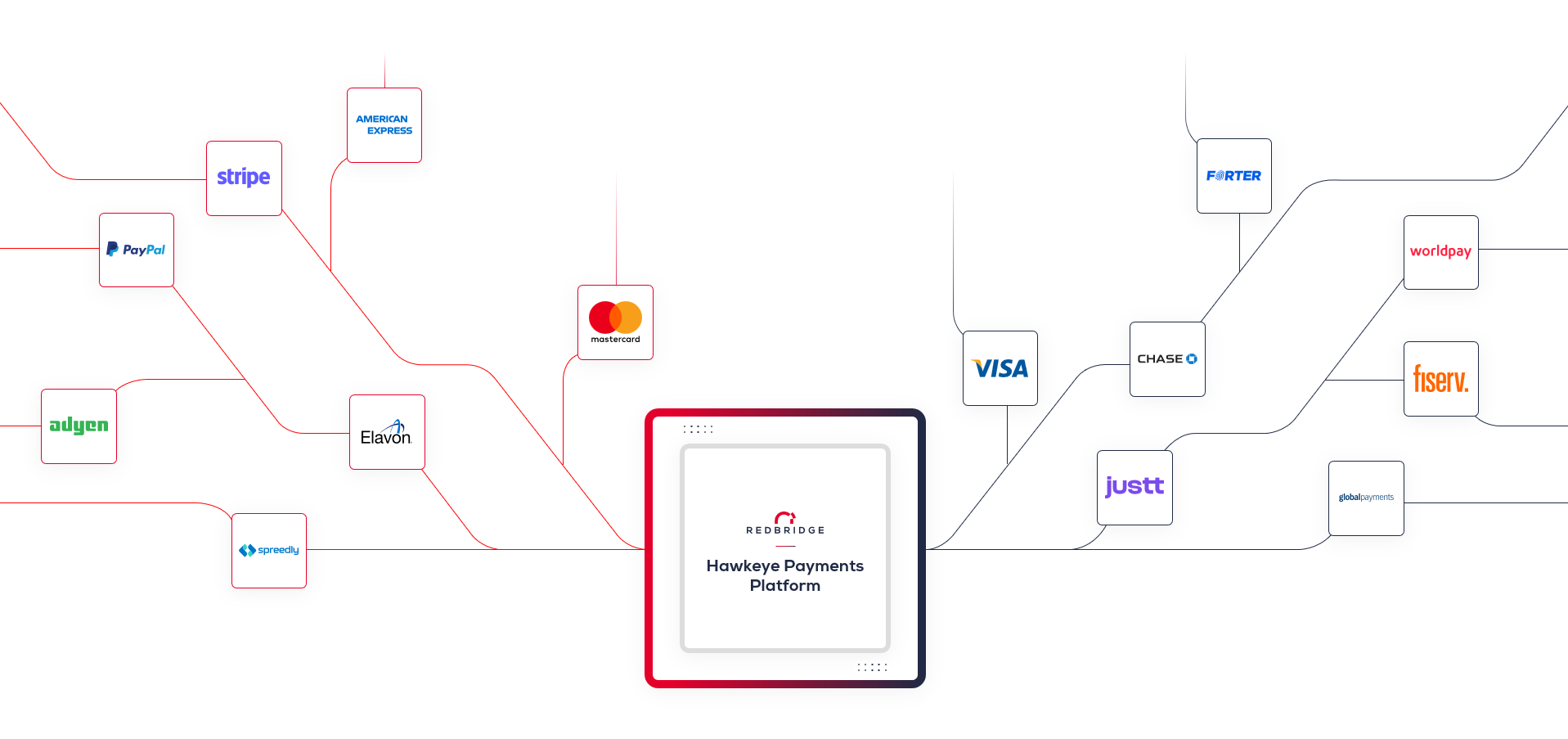
This is the foundation Redbridge has built our work on for years, and it’s also where we’ve made real, sustained investment. Our proprietary analytics platform consolidates, cleans, and structures payment data from acquirers, gateways, processors, and internal systems into a single, standardized dataset. The platform already powers the fee, routing, and transaction-data analysis behind the work we do with merchants day-to-day, ingesting transaction files, including daily data, so the analysis reflects a current and complete picture rather than a snapshot:
- Interchange optimization.
- Card and debit routing analytics.
- Acquirer and PSP pricing analysis.
- Fee and cost decomposition.
The above run on the same underlying platform, so a merchant’s fee structure, routing behavior, and transaction data can be examined together rather than as separate exercises.
This isn’t our first step into analytics, It’s the next generation of a capability we build our work on and use with clients every day. It’s changing the scale and complexity of the problems Redbridge is able to help solve on behalf of our clients.

“Redbridge was instrumental in helping us increase transparency over our payment acceptance program.”
Arnaud Caurraze
Director Group Treasury
The Platform Provides the Data. The Expertise Builds the Diagnosis.
It’s worth being precise about what the technology does and doesn’t do on its own. Our platform makes it possible to consolidate fragmented data into a single, reliable source of truth quickly. A clean dataset isn’t the same thing as a diagnosis. Translating that data into a structured view of where an organization stands, and what’s actually worth acting on, is expert-led work. Our team’s judgment is augmented by the technology. It isn’t replaced by it.
A Concrete Starting Point: The Diagnostic Scorecard
That combination – trustworthy data and expert interpretation – is what produces an early diagnostic scorecard. A data-grounded reading of a merchant’s payments performance, scored across the dimensions that drive cost and risk, and benchmarked against relevant peers in similar volume bands and verticals.
What the Process Looks Like From the Merchant’s Side
The lift on the merchant’s side is deliberately light. An assessment from Redbridge starts with data the team already has: processing statements, transaction level files from their acquirers and processors, or both, covering one to three months of activity. There is no integration to build and no new system to adopt in order to get the diagnostic.
From there the work is ours. We consolidate and standardize that data in our system, normalizing across providers so the full picture sits in one place rather than scattered across statements that do not reconcile. Against that clean dataset, we benchmark performance across the dimensions that drive cost and risk, comparing the merchant to relevant peers.
The output is a scored diagnostic delivered in two to four weeks. It demonstrates where the organization stands, where the meaningful gaps are, and which of them are worth acting on now rather than later. Some close quickly, a fee correction or a routing adjustment. Others need a more deliberate, structural program. Knowing which is which, from evidence rather than assumption, is what separates a team that spends its efforts well from one reacting to whichever problem was loudest this quarter.
We treat this as a deliberately low-lift, early step. Something a merchant can get real value from before any larger conversation about roadmaps or investment is required. It’s also, in our experience, not something every advisory approach in this space offers as a starting point. Many move straight to a set of recommendations without first establishing a measured baseline. Grounding the first deliverable in a merchant’s own data, rather than assumption or a generic industry benchmark, is a distinction we think matters. It’s one we’re glad to put on the table early rather than late, so a merchant can see tangible value before committing to anything further.
None of this means treating every below-benchmark finding as a failure. Payments performance is shaped by legacy contracts, M&A history, and regulatory constraints that no scorecard erases. What it provides is order of magnitude. Whether a gap is worth a five-figure fix or a seven-figure one changes the entire conversation about where a team should spend its time.
What Success Looks Like for the Merchant
Success here rarely shows up as a single number. For most teams it lands in three places.
Cost. Fee reductions and recovered leakage that become a part of what the organization pays to accept payments.
Confidence. Knowing from evidence, rather than assumption, where the organization stands and where to spend limited time and engineering effort.
Readiness. A clean, current data foundation, so that the next decision, whether that is a renegotiation, an integration or entry into a new market, gets made faster and better informed than the last one.
The interchange qualification problem described at the top of this article is a fair example of the first two working together. Once the downgrades were visible at the transaction level, the correction itself was straightforward. The expensive part had been the months in which nobody could see them.

“Without Redbridge’s help, it wouldn’t have been possible to consult such a wide range of specialists within such a short time.”
Jean-Claude Poupard
CFO
Shaped by the Merchants Who Use It
A platform like this is only as useful as its fit to how merchants actually operate, which is why we treat that input as core to how it develops, not an afterthought. As Redbridge works alongside merchants on their data and reporting constraints, what’s working, what’s constrained, what they’d want from a system if they were building one today, that input directly shapes where the platform goes next. The merchants we work with aren’t just on the receiving end of this capability. They help set its direction and guide its roadmap.
If your team is thinking through what a stronger data foundation for payments and treasury decisions should look like, where it’s working today, where it’s constrained, and what you’d want from it, we’d welcome that conversation.
Redbridge Payments Advisory builds its work with merchants on a proprietary analytics platform for payments diagnostics, benchmarking, and reporting. Learn more about our approach to payment analytics at redbridgedta.com/us/payment-analytics.















Optimize Your Payments Strategy Today
Reduce costs, grow sales, and increase transparency with expert payments consulting.