
Redbridge Acquires Assets of Vizant
The acquisition will enhance Redbridge’s technology, add additional resources to demystify payment cards and bring efficiency to the treasury function across the corporate landscape
In today’s payments world, one topic continues to be top of mind for both bankers and practitioners- speed. Enter Real Time Payments (RTP), the latest form of payment that aims to provide the quickest receipt option between businesses and consumers.
If there is one thing that those close to the payments industry know, it is that the industry is constantly evolving. We see payments getting faster and more convenient. With that said, the one thing merchants rarely see, as a part of all this growth and innovation, is shrinking cost. Payments, particularly card payments, just seem to be growing more expensive. While it is true that some portions of card acceptance, such as the fees paid to an acquirer, may be getting slimmer and more competitive, merchants still foot the bill for the most expensive component – interchange.
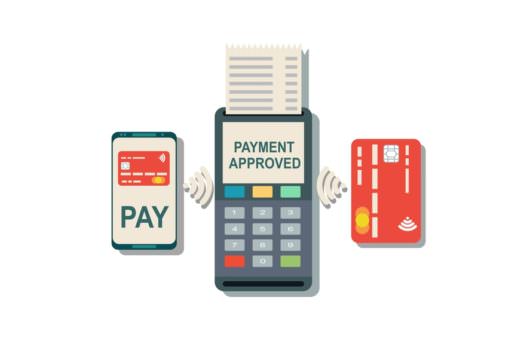
For businesses nowadays, accepting payment cards is non-negotiable. The process of a payment card transaction seems simple; a customer swipes, dips, or taps their card, receives approval, and easy as that, they are on their way with their newly purchased products or services. However, behind the scenes of this seemingly simple process, several participants are working to complete the transaction. Participants can include the cardholder, the merchant, payment card networks, issuing banks, and card acquirers, each of which can include a fee for their participation in the transaction. For corporations, who can see thousands or millions of transactions daily, the fees can quickly add up.
In November 2018, the Visa and Mastercard networks offered to reduce inter-regional multilateral interchange fees (MIFs) in Europe by at least 40% in response to the European Commission’s competition concerns. These fees apply to payments made in the European Economic Area (EEA) with consumer debit or credit cards issued outside the EEA. An example of such a payment would be an American tourist using a Visa or Mastercard card to pay for a restaurant bill in Belgium.
The SWIFT network is set to extend its KYC solution, which is currently used by 5,000 banks for correspondent banking activities, to companies. It aims to offer the 2,000 companies connected to the network a structured information exchange solution – one that is already used by partner banks for customer verification processes – by the end of 2019. Interview with Marc Delbaere, SWIFT’s Head of Corporates & Trade.
With the increase of card payments, mobile payments, peer to peer payments like Venmo, and cryptocurrencies, there are many theorists who believe cash is dead. However, according to Payments Journal, it is alive and thriving. The Federal Reserve reports that cash is still the preferred payment method for transactions under $25 in retail and, specifically, quick-service restaurants (QSR) according to a QSR Magazine article. Additionally, in 2018, 41.1% of QSR transactions were in cash.
The payment card industry has changed since its inception. What are the regulatory agencies doing to keep card users data safe? And, which of those changes will cause your company’s systems to need to be updated?
With increasing global regulations on KYC, corporate treasurers are seeking some standardization and simplification in a process that also causes a great deal of administrative red-tape at banks in their efforts to comply with ever expanding regulatory requirements.
It is a perfect time for merchants to be asking important questions regarding their current payment card processing to make sure that they are maximizing the use of available and appropriate services at a competitive rate, says Dan Carter, associate director at Redbridge.
Partner to the world’s leading corporations’ finance departments will help shape the payment ecosystem and interoperability.
At the time of the biannual review of its network fee schedule, applied to acquiring banks, Visa Europe has introduced new elements and raised the rates on ecommerce transactions. For Mélina Le Sauze, Director at Redbridge, these changes strengthen the interest in optimizing the allocation of acquiring bank flows.
Redbridge is pleased to announce the addition of Dan Carter as Associate to lead its U.S. Payment Card Solutions within Redbridge’s U.S. Treasury Advisory team. The recruitment is marking the extension and enhancement of the support and advice that Redbridge provides to global corporations around the world.
Redbridge strengthens the value of its independent advice to international trading companies. Based in Geneva, Mihai Andreoiu is appointed as Senior Director, Head of Commodities Trading & Trade Finance sector. He will also be responsible for the development of Redbridge’s new Swiss office opened in September.
The leading financial management partner to corporations is now closer to its Swiss clients and the many treasury centers of multinational companies in Switzerland.