

Digital Transformation in Treasury
Our team provides useful information to industry practitioners, through various articles, studies and research.
Digital Transformation in Treasury

How 2022 Will Transform Your Treasury Department

2020: The Year In Review

Payments Report – Shifting to faster payments

Treasury Forecasting: An Overview Of Practices
Payment Cards 101: The Ultimate Guide
Global Availability of Electronic Bank Billing Formats (BSB) 2018 Bank Survey Results
Commodity Trading Firms: Finance Perspectives
Digitalization, customer path, and new payment methods
Global Availability of Electronic Bank Billing Formats (BSB)

In today’s payments world, one topic continues to be top of mind for both bankers and practitioners- speed. Enter Real Time Payments (RTP), the latest form of payment that aims to provide the quickest receipt option between businesses and consumers.

The limited capacities of the banks have led to the emergence of alternative finance such as trade finance funds, which are typically launched by industry professionals willing to get involved with transactions that are not in the interest of traditional banks. The universe is still in its infancy with only around 15–20 such funds around the world and total assets under management of less than $10 billion.
Banks position themselves as trusted advisors with the capability of facilitating large financing deals on behalf of their clients. While banks are capable of providing financing advice, they often have interests that conflict with the interests of their clients. Banks are in the difficult position of serving their clients while also maximizing their own profits and protecting their own balance sheets.

Power Up Your Next Bank Relationship and Fee Review. As a treasury professional, having visibility into costs is a starting point for negotiation and cost-saving opportunities with your banks.

Marriott Woodland Waterway | April 7 – 9, 2019 – Redbridge is excited to exhibit at TEXPO in Houston, Texas.
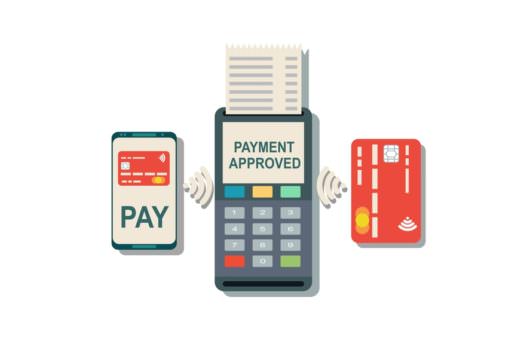
If there is one thing that those close to the payments industry know, it is that the industry is constantly evolving. We see payments getting faster and more convenient. With that said, the one thing merchants rarely see, as a part of all this growth and innovation, is shrinking cost. Payments, particularly card payments, just seem to be growing more expensive. While it is true that some portions of card acceptance, such as the fees paid to an acquirer, may be getting slimmer and more competitive, merchants still foot the bill for the most expensive component – interchange.
How do you know you are getting the best rates for the fees you are paying to your banks? You could compare what you have paid in the past or what you pay to other banks. However, are those truly accurate benchmarks? Each banking relationship varies with the multitude of services provided by each bank. The rates you pay in fees could vary just as much as the number of services you use at each bank. Utilize the below tips for smooth bank fee negotiations.

We have discussed the stages of your banking relationships and tips for a successful RFP but what does an effective RFP process look like? There are steps in the process every company should progress through for a successful RFP process. Below we detail those steps along with a few insider tips from Redbridge experts who have worked through countless RFPs with our clients.
There are two sides to the account analysis dilemma; establishing the baseline and regular auditing. To adequately solve for the bank fee problem you must do both.

Analyzing international bank fee statements requires in-depth knowledge of international banking structures, accessibility and visibility into local bank fees, and copious amounts of time and resources. Many treasurers do not make it past the first step of obtaining their international bank fee statements in useable formats to then progress to understanding their fees across multiple countries.

Now that you have determined which stage in the relationship you are in with your bank, it is time to evaluate the strength of the relationship. Banking relationships are based on performance, risk, and profitability KPIs. These relationships come down to two main objectives: fairness and accountability. For something to be truly fair, there should be transparency on all sides. Transparency and accountability are the foundation of a long-standing relationship.

Mihai Andreoiu, Senior Director at Redbridge, is a big fan of borrowing base structures as a superior form of financing for commodity players. Here are the reasons why he certainly hopes to see more such deals coming to market.

The importance of having an optimal credit profile may seem obvious but also like a daunting task. You may not know when you will need access to credit but having an optimal credit profile at all times allows you to access credit when it is needed, even unexpectedly, according to a Forbes.com article.
Analytics is helping banks and corporations gain a competitive advantage by delivering actionable insights as well as an effective solution for addressing issues like safety and compliance. The corporate world can use the same technologies and strategies to address the challenge of bank account management (BAM).

For businesses nowadays, accepting payment cards is non-negotiable. The process of a payment card transaction seems simple; a customer swipes, dips, or taps their card, receives approval, and easy as that, they are on their way with their newly purchased products or services. However, behind the scenes of this seemingly simple process, several participants are working to complete the transaction. Participants can include the cardholder, the merchant, payment card networks, issuing banks, and card acquirers, each of which can include a fee for their participation in the transaction. For corporations, who can see thousands or millions of transactions daily, the fees can quickly add up.


